🌾 Building Dynamic Villager AI in Unreal Engine 5
Introduction
Enemies may grab the spotlight in games, but the real magic lies in the everyday lives of villagers—the farmers, healers, guards, and tavern keepers who make a world feel alive.
Using State Trees and AI Perception in Unreal Engine 5, you can design NPCs that don’t just exist—they live.
🧠 State Trees for Daily Routines
Villagers thrive on predictable yet flexible routines. State Trees let you define clear phases of their day:
- Morning → Farmers tend fields, children attend lessons.
- Afternoon → Guards patrol, artisans craft.
- Evening → Families eat, tavern fills with chatter.
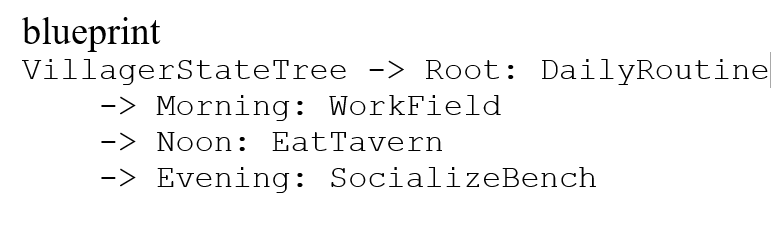
Modular states = easy to expand and adjust.
🪑 Smart Objects: Making the World Interactive
Smart Objects transform static props into living parts of the village:
- Benches → Villagers sit when tired.
- Tavern tables → Workers serve food, villagers eat.
- Wells → Children fetch water, farmers refill buckets.
This creates emergent storytelling—NPCs naturally interact with their environment.
👀 AI Perception for Villagers
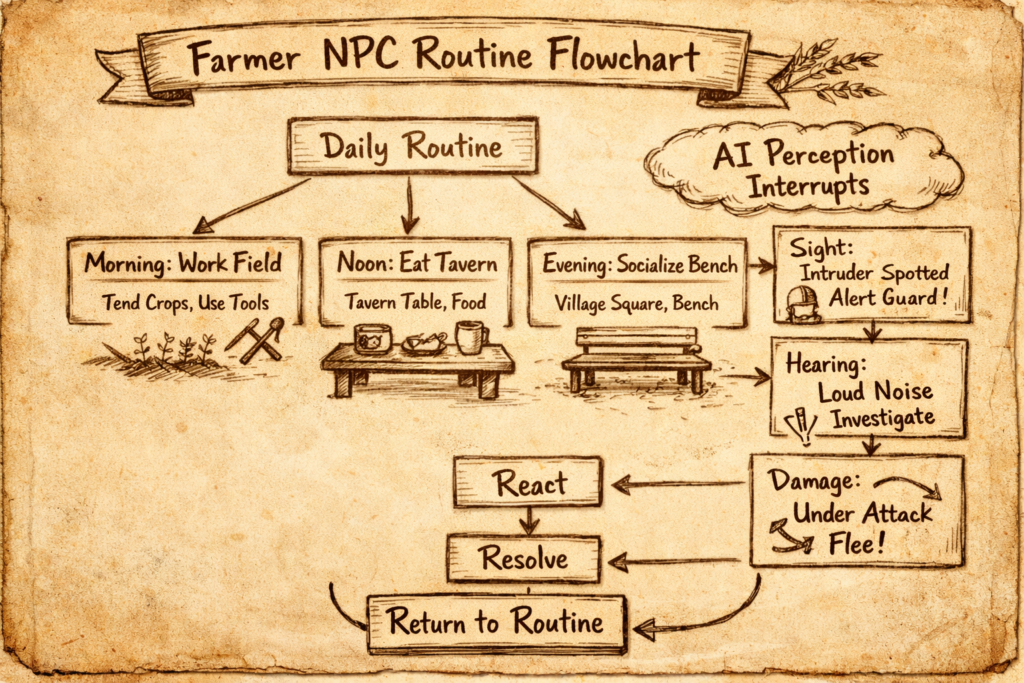
Villagers aren’t just passive—they react:
- Sight → Guards spot intruders, children wave at familiar faces.
- Hearing → Villagers respond to noises (hammering, shouting, music).
- Damage → If attacked, villagers flee or call for help.
By layering perception with State Trees, villagers shift seamlessly from routine to reactive states.
🔄 Emergent Community Behavior
The real magic happens when systems overlap:
- A farmer hears danger → runs to alert the guard.
- A guard resting → transitions to patrol when alarmed.
- Tavern workers → serve drinks when approached, creating social hubs.
These interactions make the village feel like a living organism rather than a backdrop.
✨ Conclusion
Villager AI isn’t about spectacle—it’s about subtlety. By combining State Trees, AI Perception, and Smart Objects, you can craft settlements that breathe, adapt, and tell stories without a single line of dialogue. The result is a world where players don’t just fight enemies—they live among communities that feel real.